

Finding Clients On Upwork Career Quick Facts (Global 2026)
Indicative Salary Ranges:
While compensation varies heavily by region and employer, these are typical illustrative ranges for Finding Clients On Upwork roles.
| Role Level | Example Remote Range (USD/yr) |
|---|---|
| Junior / Associate | $40,000 – $75,000 |
| Mid-Level | $70,000 – $110,000 |
| Senior / Lead | $120,000+ |
Table of Contents
1. What Is Upwork? 2. Why Upwork Is Popular 3. Understanding How Clients Think 4. Building a Strong Upwork Profile 5. Choosing the Right Niche 6. Finding the Right Jobs 7. Understanding Client Job Posts 8. Writing Winning Proposals 9. Why Personalised Proposals Matter 10. Pricing Your Services 11. Communication Is a Competitive Advantage 12. Common Mistakes 13. Building Long-Term Client Relationships 14. Optimising Your Upwork Profile 15. Using the Right Keywords 16. Building a Strong Portfolio Section 17. Understanding Connects 18. Preparing for Client Interviews 19. Understanding Fixed-Price and Hourly Projects 20. Delivering High-Quality Work 21. Earning Positive Reviews 22. Managing Your Time 23. Avoiding Common Freelancing Scams 24. Improving Your Professional Skills 25. Building Your Personal Brand 26. Expanding Beyond a Single Skill 27. Growing Your Freelance Business 28. Career Opportunities Through Freelancing 29. Best Practices for Long-Term SuccessFreelancing has completely changed the way we work. These days, millions of us are earning full-time incomes by offering our skills to clients globally, all from the comfort of our own living rooms. Whether you're a web developer, graphic designer, content writer, digital marketer, video editor, or software engineer, freelance platforms have made it easier than ever to connect with businesses that actually need what you do.
When it comes to freelance marketplaces, Upwork is definitely one of the heavyweights. It's trusted, it's competitive, and every single day, thousands of companies are out there posting projects. They're looking for talented people just like you to help them solve their problems, build their products, and grow their businesses.
But let's be real setting up an Upwork account is only the beginning. So many beginners hit a wall, submitting dozens of proposals and hearing absolutely nothing back. It's frustrating, I know! But the difference between the freelancers who succeed and those who eventually give up isn't just plain luck. It comes down to truly understanding how clients think and presenting yourself as the professional you are.
In this guide, we're going to dive into exactly how you can find clients on Upwork. We'll talk about building your credibility, writing proposals that actually catch a client's eye, and taking those crucial first steps toward a thriving freelance career.
What Is Upwork?
Think of Upwork as a massive online marketplace where businesses come to hire independent professionals. You'll find short-term gigs, long-term contracts, and even ongoing support roles.
Instead of sending out traditional job applications, you create a professional profile. This is your personal showcase a place to highlight your skills, your experience, your portfolio, and the specific services you offer.
Clients are constantly posting projects across a huge variety of categories, like:
- Freelancing & Career Development
- Mobile App Development
- Graphic Design
- Content Writing
- Video Editing
- Digital Marketing
- Artificial Intelligence
- Data Science
- UI/UX Design
- Virtual Assistance
When you see a project you like, you submit a proposal explaining exactly how you can help. From there, the client gets to pick the person who feels like the best fit for their needs.
Why Upwork Is Popular
There's a reason Upwork has become one of the go-to platforms in the freelance world. It's packed with opportunities, whether you're just starting out or you've been in your industry for years.
Here are just a few reasons why people love it:
Global Marketplace
You get to work with clients from all over the world, every single day.
Imagine collaborating with international businesses while sipping coffee in your favorite local spot it's pretty amazing!
Wide Range of Projects
Projects come in all shapes and sizes.
For example, you might find:
- Quick, one-hour tasks
- Full-scale website development
- Building mobile apps
- Offering business consulting
- Forming long-term partnerships
This variety means you can start small and gradually build up your experience as you go.
Secure Payments
Upwork offers payment protection on eligible contracts. This is huge because it gives you peace of mind and builds genuine trust between you and your clients.
Flexible Work Schedule
As a freelancer, you're the boss. You often get to decide:
- Which projects you want to take on
- When you want to work
- Where you want to work from
- How many clients you can handle at once
Honestly, this flexibility is one of the absolute best perks of freelancing!
Understanding How Clients Think
Here's a secret: one of the biggest traps beginners fall into is making it all about themselves.
The truth is, clients aren't really focused on:
- Your fancy certificates
- Your university grades
- Every single programming language you know
What they really want to know is:
- Can you actually solve my problem?
- Are you going to communicate clearly and professionally?
- Can I trust you to get the job done?
- Will you hit my deadlines?
- Have you done something like this before?
The most successful freelancers write their proposals to answer these exact questions, focusing entirely on the client's needs rather than just rattling off their own resume.
Building a Strong Upwork Profile
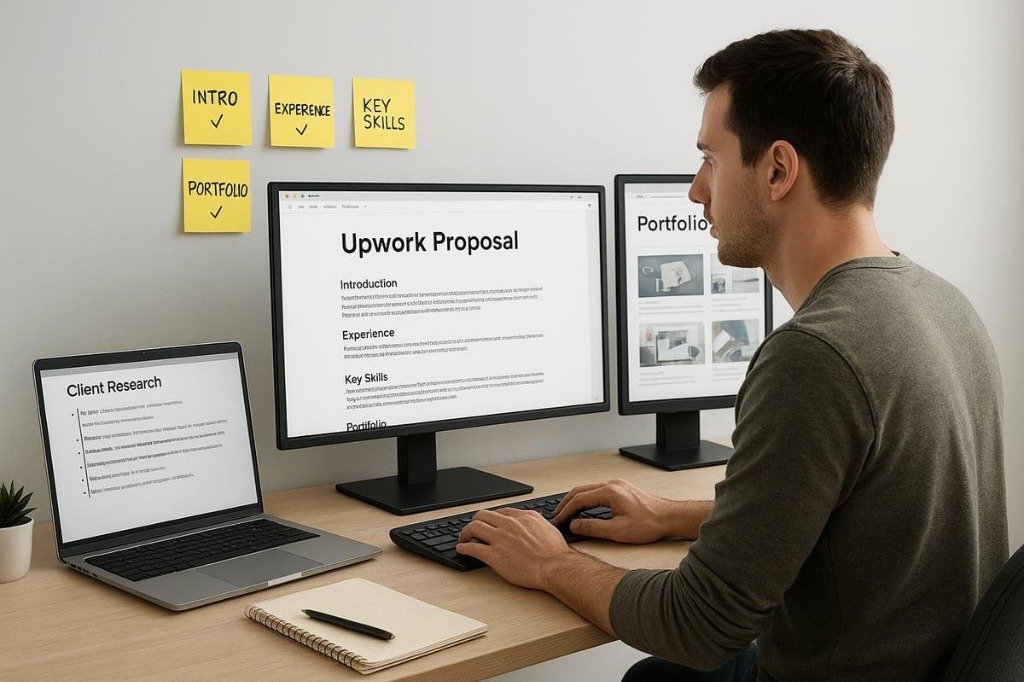
Think of your profile as your digital storefront. It's how the professional world sees you.
Before you send out a single proposal, make sure your profile covers these basics:
Professional Photo
Use a clear, high-quality picture where you look friendly and professional. Good lighting makes a huge difference!
A warm, genuine photo helps clients feel like they're connecting with a real human being.
Clear Headline
Your headline needs to tell people exactly what you do, right off the bat.
For example, instead of just "Developer," try:
- Full-Stack Web Developer
- Python Data Analyst
- UI/UX Designer
- WordPress Developer
- SEO Content Writer
A focused, specific headline always beats a vague one.
Well-Written Overview
Your profile description is your chance to shine. Make sure to talk about:
- What you're great at
- The specific problems you can solve
- How you like to work
- Your dedication to quality
- How you communicate
Keep it conversational, easy to read, and always bring it back to how you can help the client.
Portfolio
Believe it or not, a solid portfolio will win you more jobs than a stack of certificates.
Show off your best work, like:
- Websites you've built
- Apps you've developed
- Dashboards you've designed
- Graphic designs
- Detailed case studies
- Your GitHub projects
If you're brand new, don't worry! Build some personal or practice projects. It proves you have the skills, even without client history.
Choosing the Right Niche
It's tempting to say you can do everything, but offering a million different services usually just waters down your profile.
Instead, try to carve out a specific niche.
Some great examples are:
- React Developer
- WordPress Expert
- Shopify Developer
- Python Automation
- Logo Designer
- SEO Specialist
- AI Chatbot Developer
When you specialize, clients instantly understand exactly what you're best at.
Finding the Right Jobs
Let's be honest not every project out there is going to be worth your time.
Before you hit submit on a proposal, take a moment to look at:
- The actual project description
- Their proposed budget
- The client's hiring history
- Whether their payment method is verified
- How many proposals they've already received
- The skills they really need
- Their expected deadline
Applying strategically is so much smarter than just throwing proposals at every job you see.
Understanding Client Job Posts
When a client writes a good job post, they'll usually lay out:
- What they want to achieve
- The skills they're looking for
- Their timeline
- Their budget
- What exactly you need to deliver
- The experience level they prefer
Take your time and read the whole thing before you start typing.
A lot of clients will sneak little instructions into the description just to see who's actually paying attention!
Writing Winning Proposals

Your proposal is your chance to make an amazing first impression.
Here's how to make it count:
Personalise the Greeting
Skip the boring "To whom it may concern."
Try to find their name, and speak directly to their specific project.
Demonstrate Understanding
Show them you actually get what they're struggling with.
Clients absolutely love it when you focus on their needs instead of just sending a canned response.
Explain Your Solution
Walk them through how you're going to tackle their project.
Keep it simple, practical, and right to the point.
Mention Relevant Experience
Remind them of similar things you've successfully done before.
If you're a beginner, this is where you talk about those personal projects or coursework that show off your skills.
End Professionally
Wrap it up by inviting them to chat more about the project.
Keep your tone friendly, confident, and open.
Why Personalised Proposals Matter
So many new freelancers just copy and paste the same proposal over and over.
Trust me, clients spot this from a mile away.
When you personalize your proposal, you're telling them:
I took the time to read your post.
I get what you're trying to do.
I'm actually excited about this project.
I'm ready to communicate with you.
A short, thoughtful proposal will almost always beat a long, generic one.
Pricing Your Services
Figuring out what to charge can feel super overwhelming at first.
Try to steer clear of these two traps:
Don't charge so little that you seem desperate.
And don't charge premium rates if you don't have the portfolio to back it up yet.
Instead, try this approach:
Check out what similar freelancers are charging.
Think about how complex the project really is.
Make sure you're valuing your time fairly.
And remember, you can (and should!) raise your rates as you get more experience.
Fair pricing plus great communication is the real secret to long-term success.
Communication Is a Competitive Advantage

You'd be surprised how often clients hire someone simply because they're great to talk to, even over someone with slightly better tech skills.
Being a good communicator means:
Getting back to people quickly.
Asking smart, thoughtful questions.
Making sure you both agree on what needs to be done.
Keeping them in the loop with updates.
Just being a polite, professional person to work with.
When you communicate clearly, you build trust, and trust is everything.
Common Mistakes
We all make mistakes, but a lot of beginners trip up by:
Applying to literally everything they see.
Using the same copy-paste proposal.
Skimming over the project requirements.
Promising they can finish in a day when it'll take a week.
Underestimating how much work a project really is.
Letting their portfolio collect dust.
Or worst of all, giving up after they get a few "no's".
Hang in there! Succeeding on Upwork takes patience, persistence, and a willingness to keep getting better.
Building Long-Term Client Relationships
Landing that first project feels amazing.
But having a client come back to you again and again? That's the dream.
Happy clients will bring you more work, tell their friends about you, and leave glowing reviews that make your profile shine.
Doing great work every single time is the best marketing strategy you could ever have.
Optimising Your Upwork Profile
Setting up your profile isn't a one-and-done deal. If you want clients to find you, you need to keep it fresh and optimized.
Make sure your profile always highlights:
- Your main services
- Your hard skills
- The industries you know best
- The tools and software you love using
- The real value you bring to the table
Keep your language natural and professional, and always focus on how you make your clients' lives easier, rather than just listing out every skill you've ever learned.
Using the Right Keywords
Clients use search bars to find freelancers, which means keywords matter.
Try to weave relevant keywords naturally into your profile. It'll help you pop up in their searches! Just keep it conversational nobody likes reading a profile that sounds like it was written by a robot stuffing keywords into every sentence.
Building a Strong Portfolio Section
I can't stress this enough: your portfolio is the MVP of your profile.
Clients want to see what you can actually do before they hand over their money.
Make sure to include things like:
- Responsive websites you've built
- Mobile apps you've worked on
- Sleek dashboards
- High-converting landing pages
- Beautiful logo designs
- Clever API integrations
- Deep data analysis reports
- Scripts that automate boring tasks
For every piece in your portfolio, give a quick rundown of:
- What the goal was
- What your specific role was
- The tech or tools you used
- The awesome results you got
Showing real, practical work is always more convincing than just listing your degrees.
Understanding Connects
Upwork uses something called "Connects" as a kind of currency for applying to jobs.
Since you only get so many of them, you have to use them smartly.
Instead of throwing Connects at every job on the board:
Focus strictly on jobs that fit your skillset.
Read the description like a hawk.
Write a proposal that speaks directly to that client.
Only hit apply if you know you can knock it out of the park.
Sending five incredible proposals is always going to work out better than spamming fifty generic ones.
Preparing for Client Interviews

If a client loves your proposal, they'll probably want to chat before hiring you.
When you get on that call or chat:
Be professional but be yourself!
Ask questions that show you care about the project.
Make sure you both agree on what the project actually is.
Double-check those deadlines.
Talk about what you'll be delivering.
Walk them through how you like to work.
A great chat during an interview is usually what seals the deal.
Understanding Fixed-Price and Hourly Projects
You'll mostly see two types of contracts on Upwork.
Fixed-Price Projects
This is where you and the client agree on a single, flat price for the whole project before you start typing a single line of code or design.
Hourly Projects
Just like it sounds you get paid for the exact hours you work.
Pick the one that makes the most sense for how you work and the kind of project it is.
Delivering High-Quality Work
Getting the job is great, but doing the job is where it counts.
If you want to build a stellar reputation:
Never miss a deadline.
Always double-check your work before you send it.
Keep talking to the client as you go.
Follow their instructions to the letter.
Hand over files that are clean and organized.
And be open to tweaking things if they need a reasonable revision.
Earning Positive Reviews
Never underestimate the power of a good review. Those five golden stars are basically your ticket to higher-paying clients on Upwork.
Managing Your Time
When you're a freelancer, you're the boss. That means it's totally up to you to manage your schedule, set boundaries, and make sure you're getting things done without burning out.
Avoiding Common Freelancing Scams
Upwork is generally super safe, but you always want to keep your guard up. Stick to communicating and getting paid on the platform to protect yourself.
Improving Your Professional Skills
The freelance world moves fast! Make sure you're always learning, playing with new tools, and leveling up your skills so you stay ahead of the pack.
Building Your Personal Brand
People remember a great vibe. If you show up consistently, do great work, and treat people well, clients won't just remember you they'll come looking for you.
Expanding Beyond a Single Skill
Being an expert in one thing is awesome, but if you can learn a complimentary skill like a designer learning a bit of frontend code you instantly become a total powerhouse.
Growing Your Freelance Business
As you get more confident and your schedule gets packed, don't be afraid to start expanding what you offer or even bringing on help. The sky is the limit!
Career Opportunities Through Freelancing
The experience you get hustling on Upwork isn't just about quick cash. It builds a real-world portfolio that can open doors to amazing full-time roles, consulting gigs, or even starting your own agency.
Best Practices for Long-Term Success
If you want to make this freelance thing last for the long haul, remember to:
Keep your profile looking sharp and up to date.
Always add your latest and greatest work to your portfolio.
Take the time to write proposals that actually sound like you.
Never leave your clients guessing communicate clearly.
Knock their socks off with quality work, every time.
Listen to feedback and use it to get even better.
Keep your ear to the ground for what's new in your industry.
Never stop learning.
Treat your clients like partners.
And above all, treat your freelance gig like the real, professional business it is.
Finding Clients On Upwork Essential Resources
Ready to take the next step? Here are the most relevant and targeted resources specifically for Finding Clients On Upwork: