
Cloud Computing Career Quick Facts (Global 2026)
Indicative Salary Ranges:
While compensation varies heavily by region and employer, these are typical illustrative ranges for Cloud Computing roles.
| Role Level | Example Remote Range (USD/yr) |
|---|---|
| Junior / Associate | $85,000 – $125,000 |
| Mid-Level | $120,000 – $170,000 |
| Senior / Lead | $165,000+ |
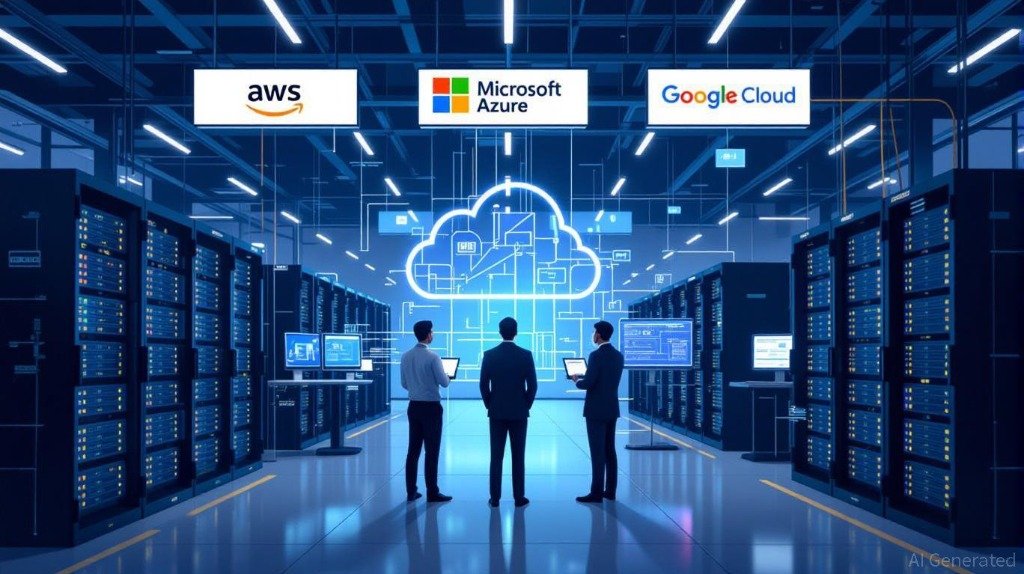
The era of the on-premise physical server rack is effectively dead. Modern software runs in decentralized, hyper-scalable cloud environments managed by giants like AWS, Google Cloud, and Microsoft Azure. Cloud computing is the invisible infrastructure keeping the internet online, and Cloud Engineers are the architects who design, deploy, and secure these massive distributed systems. In 2026, understanding the cloud is fundamental for any backend developer, DevOps engineer, or solutions architect.
Cloud computing has totally flipped the script on how we build and scale things online.
Instead of draining your bank account on physical servers you have to manage yourself, you can simply rent computing power over the internet exactly when you need it. Whether you're looking to store a bunch of files, host a portfolio website, run intensive business apps, crunch large datasets, or even train cutting-edge AI models cloud platforms give you these superpowers on demand. Best of all? You only pay for what you actually use, which makes it incredibly flexible and budget-friendly.
Nowadays, businesses of all shapes and sizes lean on the cloud. Startups use it to get their products off the ground in record time, universities rely on it for seamless online learning, and hospitals use it to securely keep patient records safe. Even your favorite streaming services use the cloud to deliver movies to millions of us around the world without a hitch!
If you're thinking about your future, learning cloud computing is honestly one of the smartest career moves you can make right now. With almost every organization migrating to the cloud, there's a massive, growing demand for skilled cloud engineers, architects, and DevOps pros. Whether you dream of being a software engineer, system admin, cybersecurity expert, or cloud architect, mastering these skills is going to open so many exciting doors for you.
What is Cloud Computing?
At its core, cloud computing is just a fancy way of saying you're using someone else's powerful computers over the internet instead of relying on your own local hard drive or on-site servers.
You can tap into all sorts of amazing services, like:
- Computing power
- Data storage
- Databases
- Networking
- Software applications
- Artificial Intelligence services
- Machine Learning tools
- Security services
- Backup and disaster recovery
Rather than dropping thousands of dollars on expensive hardware, you can instantly access all these tools from your web browser or a management dashboard whenever inspiration strikes.
Think of the cloud like the electricity in your house. You don't build your own power plant in your backyard, right? You just plug into the wall, use the power you need, and pay your monthly bill based on your usage. Cloud computing works exactly the same way!
Why is Cloud Computing Important?
The cloud hasn't just changed tech it's completely democratized it, putting insanely powerful computing resources into the hands of everyday creators and businesses.
Cost Savings
You no longer have to tie up your funds buying physical servers or paying for the cooling and electricity to run a data center. You just pay a small fee for what you actually use. It's that simple.
Scalability & Reliability
With cloud platforms, you can scale your resources up or down in a matter of minutes. Plus, major providers have massive data centers scattered all over the globe. If one facility goes offline, your app just seamlessly shifts to another location without skipping a beat.
Security
You might worry about putting your data "out there," but cloud providers invest billions into state-of-the-art security, advanced encryption, and strict compliance standards to keep your data safer than it would likely be on a server in your own office.
Types of Cloud Computing
When you start exploring, you'll generally find three main ways the cloud is set up.
Public Cloud
This is what most of us use. The infrastructure is owned by big third-party companies like Amazon (AWS), Microsoft (Azure), or Google (GCP). You share the underlying hardware with other customers, which keeps costs really low for everyone.
Private Cloud
Imagine having a slice of the cloud that's exclusively yours. A private cloud is dedicated entirely to one single organization. It gives you ultimate control and security, making it perfect for hospitals, banks, and places that handle highly sensitive information.
Hybrid Cloud
Can't decide? The hybrid cloud gives you the best of both worlds. You can keep your super-sensitive data locked down in a private cloud, but still tap into the massive computing power of the public cloud for your heavy-lifting apps.
Cloud Service Models
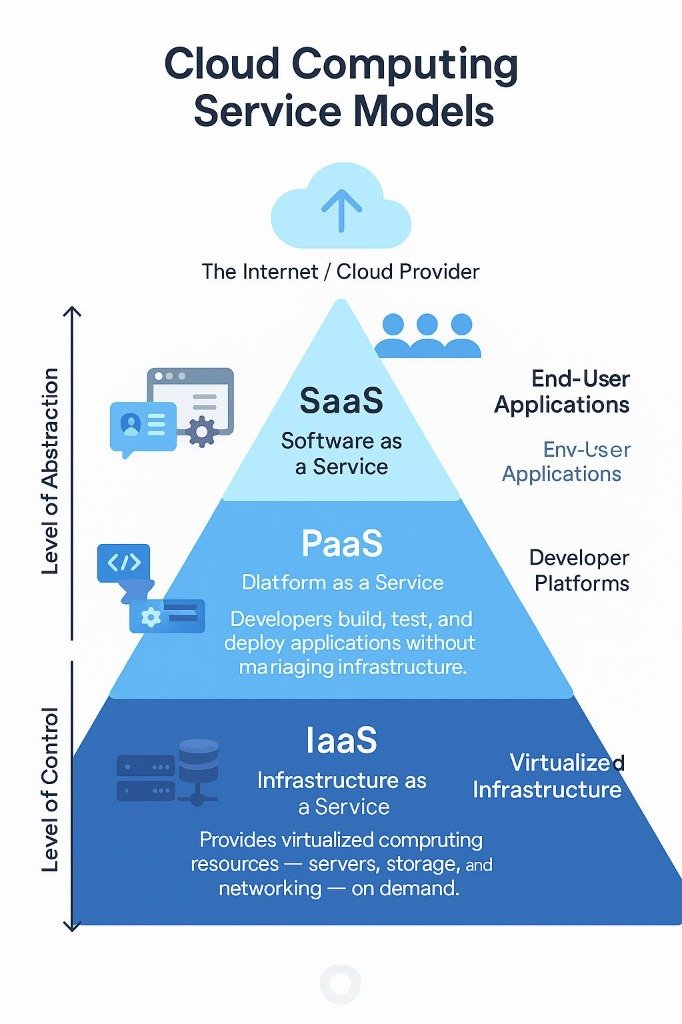
Cloud services usually come in three different "as-a-Service" models. Don't let the acronyms scare you!
Infrastructure as a Service (IaaS)
IaaS is like renting a bare piece of land. You get the virtual servers, storage, and networking, but it's up to you to install the operating system and build your apps. Examples: Amazon EC2, Azure Virtual Machines, Google Compute Engine.
Platform as a Service (PaaS)
PaaS is like renting a fully furnished apartment. It gives you a complete environment to build, test, and launch your apps. As a developer, you can just focus on writing great code without sweating the server maintenance. Examples: Google App Engine, Azure App Service, AWS Elastic Beanstalk.
Software as a Service (SaaS)
SaaS is the most common model it's like staying in a hotel. You just use the software over the internet without having to install or update anything yourself. Examples: Gmail, Google Docs, Microsoft 365, Dropbox, Zoom.
Top Cloud Platforms
While there are many providers out there, three giants currently rule the cloud computing world.
Amazon Web Services (AWS)
AWS is the oldest, biggest, and most popular cloud platform out there. It offers a dizzying array of services for basically anything you can imagine from machine learning to database management. It's the go-to choice for countless startups, massive enterprises, and even governments.
Microsoft Azure
Azure is Microsoft's answer to the cloud, and it plays incredibly well with tools you might already know, like Windows Server or Microsoft 365. If a company is already deeply invested in the Microsoft ecosystem, Azure is usually a no-brainer.
Google Cloud Platform (GCP)
Google Cloud really shines when it comes to data analytics, Artificial Intelligence, and containerized apps (like Kubernetes). If you're building something data-heavy or AI-driven, GCP is an incredibly powerful sandbox to play in.

Career Opportunities & Salaries
Because so many businesses are ditching physical servers for the cloud, they desperately need people who know how to build and maintain these systems. You could step into amazing roles like Cloud Engineer, Cloud Architect, DevOps Engineer, or Cloud Security Expert.
Salary Expectations
Let's be honest it pays well! Cloud professionals are among the highest earners in the tech industry today. If you take the time to learn tools like AWS, Azure, Docker, and Kubernetes, you'll find yourself with fantastic job security and very competitive pay.
DevOps, Docker, and Kubernetes
You can't really talk about the modern cloud without bringing up DevOps and containers. They go together like peanut butter and jelly.
Docker
Think of Docker like virtual shipping containers for your code. It lets you bundle your application and everything it needs to run into one neat little package. This guarantees your app will run perfectly anywhere you put it, preventing that dreaded "but it works on my machine!" problem.
Kubernetes
When your app grows and you suddenly have hundreds of these Docker containers to manage, doing it manually becomes a nightmare. Kubernetes acts like a brilliant orchestra conductor, automatically managing, scaling, and repairing all your containers so you don't have to.

The Certification-Driven Path
Unlike web development where projects speak louder than paper, Cloud Engineering heavily values vendor certifications. Follow this tiered progression:
Tier 1: Cloud Fundamentals
Understand the core concepts of virtualization, IaaS, PaaS, and SaaS. Target Certifications: AWS Cloud Practitioner or Microsoft Azure Fundamentals (AZ-900). Learn basic networking (VPCs, Subnets) and storage solutions.
Tier 2: The Associate Architect
Move beyond basics into actual architecture. Learn how to deploy scalable, highly available systems using load balancers and auto-scaling groups. Target Certifications: AWS Certified Solutions Architect – Associate.
Tier 3: Infrastructure as Code (IaC)
Stop clicking through the AWS console. Learn to provision cloud resources using code. Master Terraform, AWS CloudFormation, and configuration management tools like Ansible to automate infrastructure deployment.
Tier 4: Professional Specialization
Dive deep into a niche: Cloud Security, DevOps (CI/CD pipelines), or Big Data infrastructure. Target Certifications: AWS Certified Security – Specialty or Azure Solutions Architect Expert.
Concrete Projects to Build
Skip the generic "To-Do List" apps. If you want to impress recruiters in 2026, build these three concrete portfolio projects:
1. Serverless Web Application
Build a dynamic web app without managing a single server. Use AWS S3 for frontend hosting, API Gateway for routing, Lambda for backend logic, and DynamoDB for the database.
Serverless Architecture2. Fully Automated CI/CD Pipeline
Create a workflow where pushing a simple Node.js app to GitHub automatically runs tests via GitHub Actions, builds a Docker image, pushes it to DockerHub, and deploys it to an EC2 instance.
DevOps & Automation3. High Availability E-Commerce Backend
Provision an architecture using Terraform that includes a Load Balancer, an Auto Scaling Group of web servers across multiple availability zones, and a replicated RDS database for fault tolerance.
Infrastructure as CodeWatch & Learn: What is Cloud Computing?
Understand the core concepts of cloud infrastructure and services.
Cloud Computing Essential Resources
Ready to take the next step? Here are the most relevant and targeted resources specifically for Cloud Computing: