
Javascript Career Quick Facts (Global 2026)
Indicative Salary Ranges:
While compensation varies heavily by region and employer, these are typical illustrative ranges for Javascript roles.
| Role Level | Example Remote Range (USD/yr) |
|---|---|
| Junior / Associate | $65,000 – $105,000 |
| Mid-Level | $100,000 – $145,000 |
| Senior / Lead | $140,000+ |
JavaScript has evolved from a simple scripting language used to make buttons blink, into the undisputed lingua franca of the modern web. Today, JavaScript (and its strongly-typed sibling, TypeScript) powers everything from intricate single-page frontend applications to heavy-duty enterprise backend servers via Node.js. If you want a career that allows you to seamlessly transition between frontend and backend roles, JavaScript is the ultimate foundational language to master.
Think of JavaScript as the heartbeat that brings websites to life. Every time you're tossing items into your online cart, chatting with customer support in real-time, or mindlessly scrolling through your social feeds, JavaScript is the magic working tirelessly behind the scenes. It's what turns a static page into a fun, interactive experience.
If web development were a team, HTML, CSS, and JavaScript would be the ultimate trio. HTML builds the skeleton, CSS gives it a sense of style, and JavaScript? It’s the brain that tells the page how to move and react. You honestly can't have a modern website without all three working together perfectly.
And let me tell you, JavaScript’s popularity has completely exploded over the last few years! It’s outgrown just the web browser. Today, people use it to build everything from mobile apps and desktop software to heavy-duty backend servers and smart home devices. This crazy versatility is exactly why JavaScript is one of the smartest skills you could pick up in 2026.
Whether you're just dipping your toes into the coding world or you're a student dreaming of a career in software engineering, learning JavaScript is your golden ticket. It gives you the power to craft fast, modern, and highly interactive applications that people actually love using.
What is JavaScript?
At its core, JavaScript is a super popular, high-level programming language that lets you build dynamic, interactive websites. It was whipped up by Brendan Eich way back in 1995, and man, has it grown up since then! Today, it's easily one of the most widely used languages on the planet.
In the early days, JavaScript was strictly a "browser-only" language. But fast forward to today, thanks to cool tech like Node.js, you can actually run JavaScript on servers too. That means you can build entire web applications from front to back using just one language!
Ever notice how a webpage responds the second you click something like a modal popping up or a feed loading new posts without refreshing the whole page? Yup, you guessed it, that's JavaScript working its magic.
Here are just a few awesome things JavaScript does every day:
- Interactive navigation menus
- Image sliders and carousels
- Online forms with instant validation
- Dark mode and theme switching
- Shopping carts
- Live chat systems
- Real-time notifications
- Online games
- Video players
- Interactive dashboards
Why Should You Learn JavaScript?
Look, JavaScript isn't just another language to check off your list. It’s an absolute powerhouse that opens up a ton of doors for you. Not only is it super flexible, but it also comes with a massive ecosystem of tools and an insane amount of career opportunities.
It's Essential for Web Development
You’ll be hard-pressed to find a modern website that doesn't use JavaScript. If your goal is to become a frontend or full-stack developer, this is non-negotiable. You’ve gotta know it!
Huge Job Market
Companies are literally always on the hunt for solid JavaScript developers. Whether it’s a scrappy little startup or a massive tech giant, these skills are in incredibly high demand.
One Language, Many Possibilities
The best part? You're not boxed in. Once you know JavaScript, you can build Websites, Web applications, Mobile apps, Desktop applications, APIs, Backend servers, Browser extensions, and Progressive Web Apps (PWAs).
Large Community
Because so many people use JavaScript, the community is gigantic. Whenever you get stuck (and trust me, we all do), you'll find thousands of tutorials, forums, and open-source projects ready to help you out.
Where is JavaScript Used?
Honestly? Everywhere. JavaScript powers so many of the digital tools we rely on daily.
Frontend Development
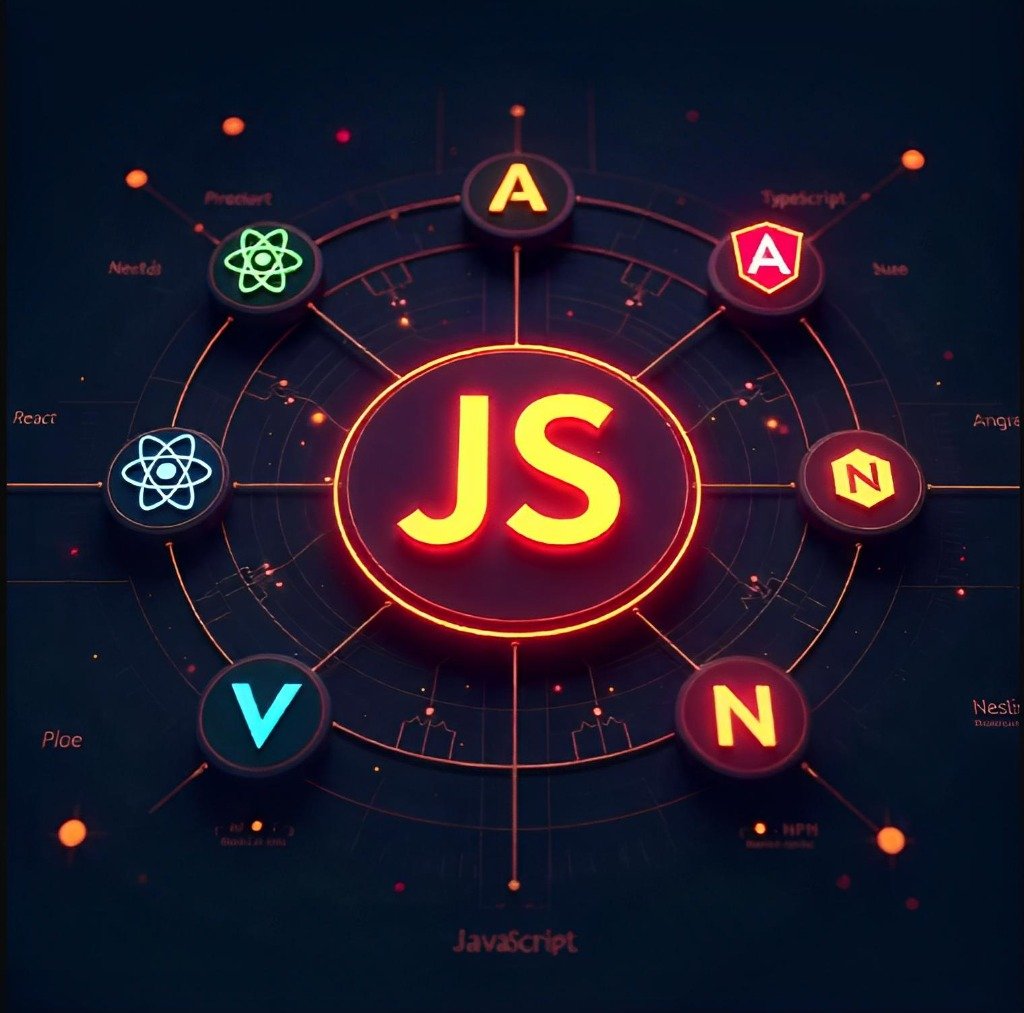
It’s the undisputed king of interactive websites. You’ve probably heard of some of the huge libraries and frameworks built on it, like React, Vue.js, Angular, and Next.js.
Backend Development
By throwing Node.js into the mix, you can use JavaScript to build robust backend systems, like REST APIs, secure authentication flows, and real-time chat servers.
Mobile & Desktop App Development
Want to build an app for both Android and iOS? Frameworks like React Native have you covered. Want to build desktop software like VS Code or Discord? Electron.js makes it totally possible.
Game Development
Yep, you can even make games! Developers use tools like Phaser, Three.js, and Babylon.js to build surprisingly complex games that run right in your browser.
Core JavaScript Concepts Every Beginner Should Learn
I know you're eager to start building cool projects, but you really need to get the basics down first.
You’ll want to start by wrapping your head around: Variables, Data Types, Operators, Functions, Arrays, Objects, Loops, Conditional Statements, DOM Manipulation, Events, ES6 Features, Fetch API, Modules, Error Handling, and Async Programming.
JavaScript vs HTML and CSS
You might be wondering, "Why do I have to learn three separate things just to build a website?"
Think of it like building your dream house:
- HTML puts up the walls and the roof. It's the core structure.
- CSS acts as your interior designer picking out the paint colors and arranging the furniture.
- JavaScript is the electricity and plumbing. It adds the working lights, the security system, and the running water!
Popular JavaScript Frameworks and Libraries
Once you’re comfortable with plain JavaScript, a whole new world opens up with frameworks and libraries. These are essentially pre-written toolkits that help you build pro-level apps way faster and with a lot fewer headaches.
React & Next.js
React is an absolute beast in the web world. Built by Meta, it lets you create super-fast, snappy user interfaces using reusable building blocks (components). Next.js takes React to the next level by giving you amazing performance features right out of the box.
Vue.js & Angular
Vue.js is loved because it’s incredibly approachable and easy to learn. On the flip side, Angular (built by Google) is a heavyweight framework that’s perfect for tackling massive, complex enterprise apps.
Node.js & Express.js
With Node.js, you break out of the browser and can run JavaScript directly on a server. Pair it with Express.js, a lightweight framework that makes setting up servers and APIs a total breeze, and you’re unstoppable.
Career Opportunities & Salaries
If you’re looking for job security, you’ve picked the right language! JavaScript developers are always in demand. You could land a role as a Frontend Developer, Backend Developer, Full Stack Developer, or specialize as a React or Node.js Developer.
Freelancing with JavaScript
It’s also an amazing skill if you want to be your own boss. Small businesses and startups are always looking for help building web apps, and you can easily offer your services on sites like Fiverr, Upwork, and Toptal.
Salary Expectations
Because these skills are so critical, companies are willing to pay top dollar for them. Master modern tools like React, Next.js, Node.js, and TypeScript, and you'll find yourself looking at some really fantastic career opportunities!
The Modern JS Ecosystem Journey
JavaScript fatigue is real—there are too many frameworks. Follow this focused progression to avoid getting overwhelmed:
1. Deep Vanilla JS
Master ES6+ syntax, Promises/Async/Await, Closures, the Event Loop, and DOM manipulation before ever touching a framework.
2. The Framework
Pick React or Vue. Understand component architecture, hooks, state management (Redux/Zustand), and reactive UI patterns.
3. Node Environment
Move to the backend. Learn how Node.js handles async I/O. Build REST APIs with Express, and connect to databases (MongoDB/Mongoose).
4. Meta-Frameworks
Combine frontend and backend with Next.js or Nuxt. Master Server-Side Rendering (SSR), Static Site Generation (SSG), and edge computing.
Concrete Projects to Build
Skip the generic "To-Do List" apps. If you want to impress recruiters in 2026, build these three concrete portfolio projects:
1. Real-time Crypto Dashboard
Fetch live data from CoinGecko's API and display interactive charts using Chart.js. Demonstrates asynchronous programming and data visualization.
Data Visualization2. E-commerce Cart System
Build a product grid where users can add items to a cart, calculate totals, and mock a checkout using LocalStorage. Proves you understand state management.
State Management3. Interactive Quiz with Timer
Create a timed quiz app that calculates a score and dynamically updates the DOM. Shows mastery of events, intervals, and conditional logic.
DOM & Events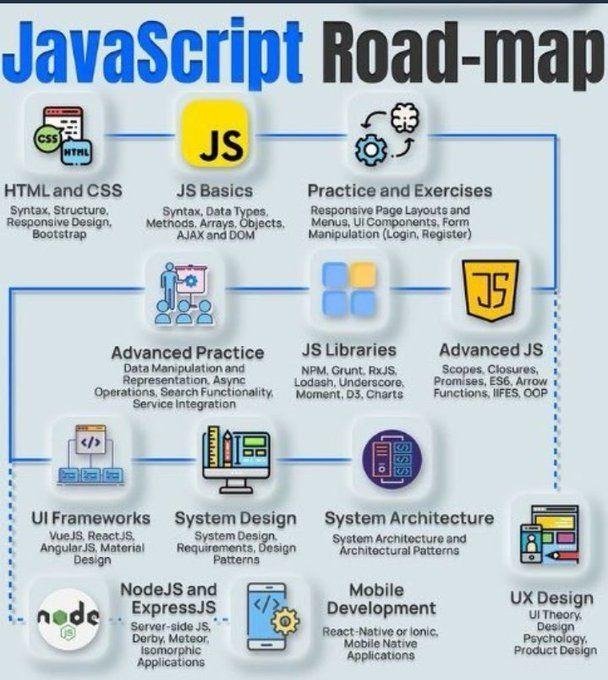
My biggest advice? Code every single day. Focus on really understanding the "why" behind the code instead of just memorizing it. And definitely push all your projects to GitHub it’s the best way to show off your hard work!
Watch & Learn: JavaScript Tutorial for Beginners
Learn modern JavaScript from scratch with practical examples.
Javascript Essential Resources
Ready to take the next step? Here are the most relevant and targeted resources specifically for Javascript: